25th March 2026, Peter Froggatt Centre, Queen’s University Belfast
Organised by Dr. Dipali Mathur in collaboration with Prof. John Barry, Overcoming Barriers to the Clean Energy Transition in Northern Ireland: Re-thinking Policy, Planning, and Participation brought together panellists from local government, industry, community energy, and academia to reflect on why Northern Ireland remains off-track in meeting its 2030 clean energy targets and what kinds of intervention are now needed to close the gap.
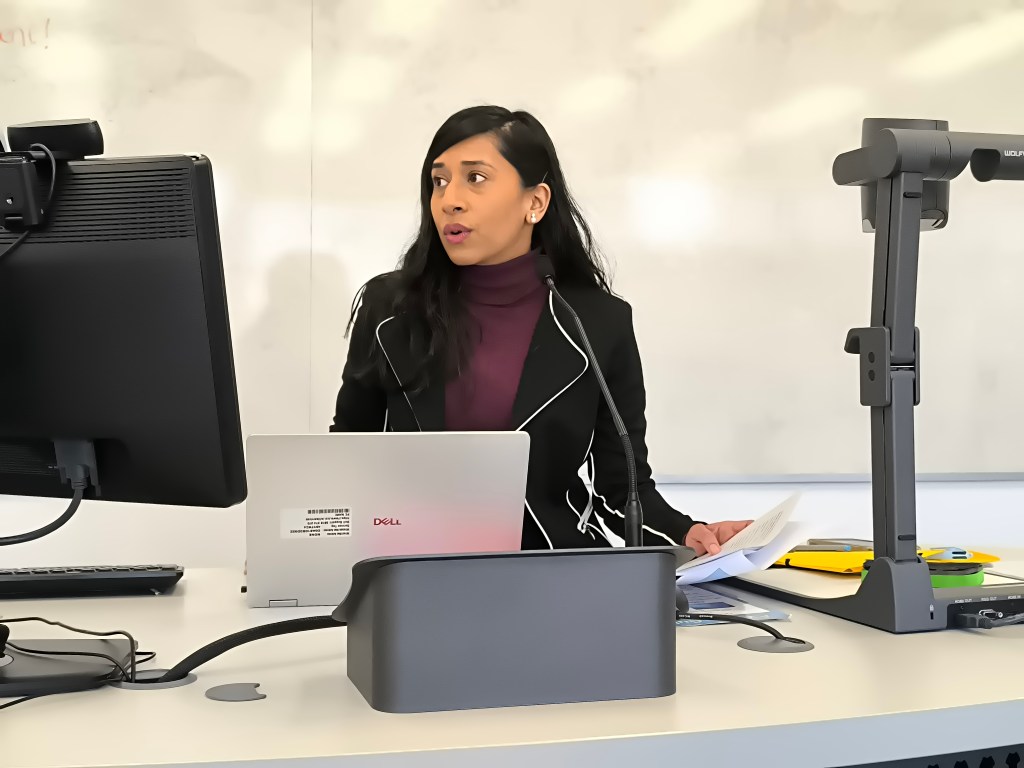
The discussion was organised in response to the findings of the 2025 Northern Ireland Audit Office report, which raised serious questions about delivery, oversight, and value for money in relation to progress on key taregts mentioned in NI’s Energy Strategy for 2030. Against that backdrop, the event focused not only on why progress towards the key targets has been slow, but also on what would be required to move from targets on paper to more effective implementation in practice.
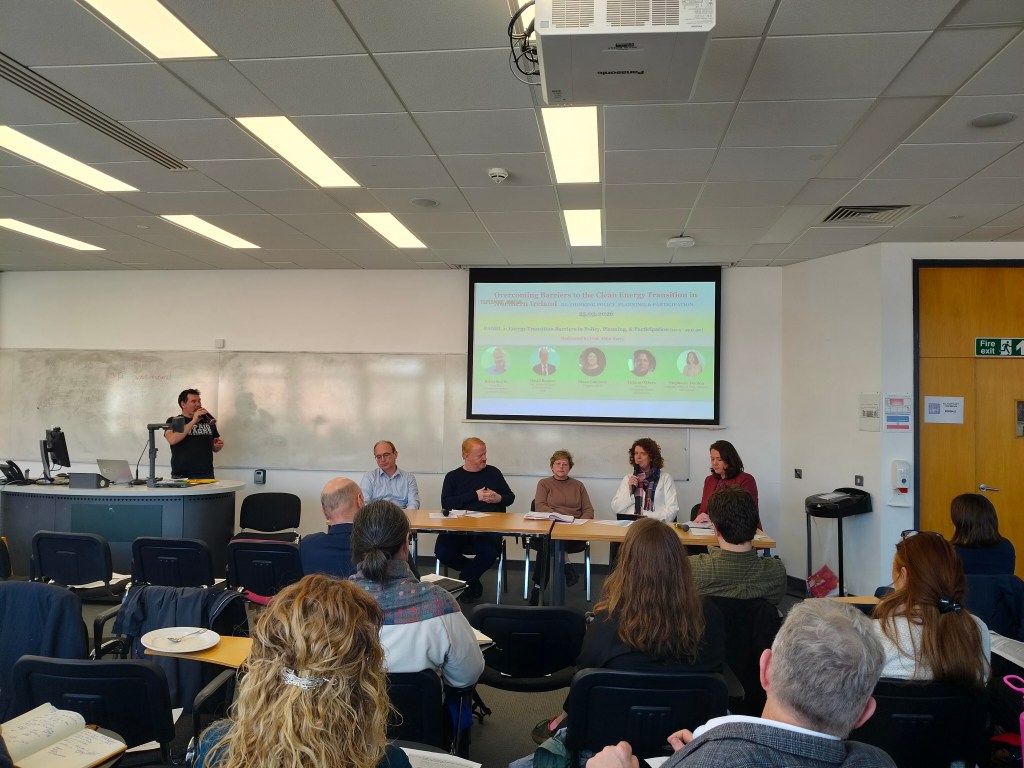
L-R: Prof. John Barry, Prof. David Rooney, Cllr Brian Smyth, Ms. Tiziana O’Hara, Ms. Diane Emerson, and Ms. Stephanie Dunlop
Panel 1 on Energy Transition Barriers in Policy, Planning, & Participation identified the biggest challenges in NI’s decarbonisation pathway. Brian Smyth pointed to a lack of joined-up thinking across government and the failure to communicate the transition in terms that connect with people’s everyday concerns, such as housing and the cost of living. David Rooney raised questions about institutional risk aversion, siloed decision-making, and who ultimately benefits from the transition. Diane Emerson stressed that Northern Ireland has the resources needed for progress, but not yet the delivery capability or cross-sector coordination required to move at pace. Tiziana O’Hara made a strong case for community ownership, arguing that citizens are still too often treated as consumers rather than participants. Stephanie Dunlop highlighted planning delays, grid constraints, and fragmented governance as key obstacles.
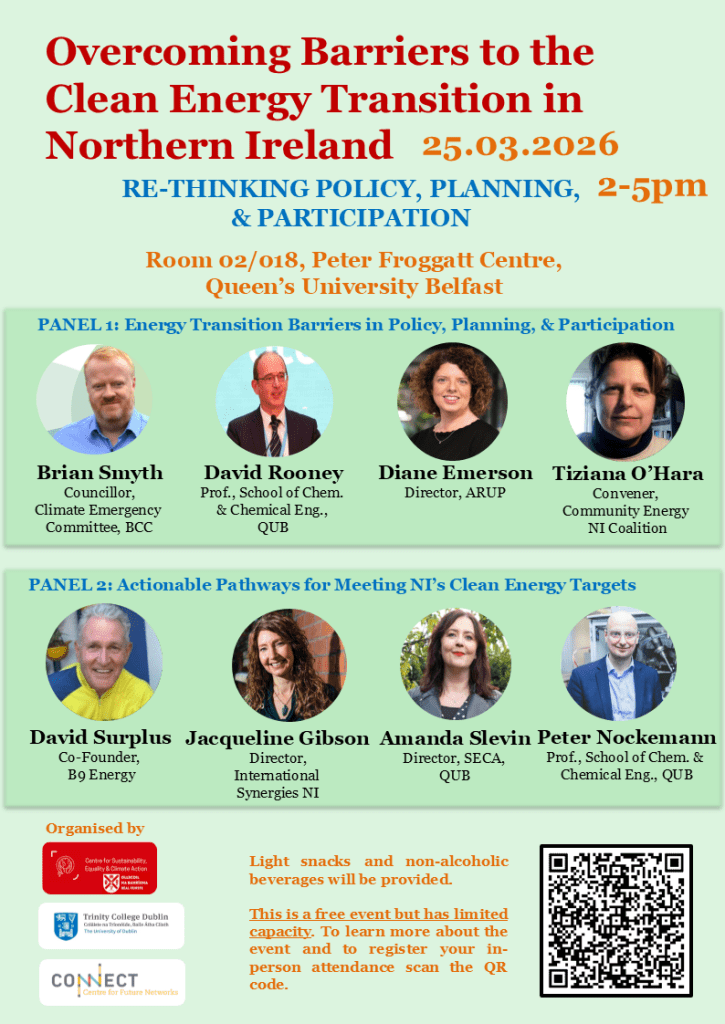
Panel 2 took a more solutions-oriented approach in discussing Actionable Pathways for Meeting Northern Ireland’s Clean Energy Targets. David Surplus emphasised the need for prioritising grid reform and infrastructure readiness, particularly for harder-to-abate sectors such as shipping and heavy industry. Jacqueline Gibson drew attention to industrial symbiosis, reuse policy, and the importance of addressing overlooked Scope 3 emissions. Peter Nockemann highlighted the interdependence of electrification, energy storage, critical minerals, recycling, and skills.
The event reinforced the point that Northern Ireland’s clean energy challenge is no longer one of ambition. It is also a question of governance, delivery, public legitimacy, and how decarbonisation policy intersects with wider issues of affordability, infrastructure access, and local benefit.
Read the Key Insights Report from the event below:
To learn more about the panellists, see the event programme below:
 Counter Data Lab